
Diastasis and Collagen Synthesis
A Glimpse at some Research around Collagen Synthesis and Exercise, and it's application to improving Rectus Diastasis Recovery.
I have been spending my recovery post-surgery digging around the research into how to improve tissue collagen synthesis in the hope to better assist women with rectus diastasis post-birth. This is my favourite area to work in. It is also an area that is poorly researched which saturates social media pages with misconceptions, fear mongering, and profiteering. We need to do better.
For those not familiar with the term rectus diastasis click on the link below for a summary of
- What is rectus diastasis
- Possible causes
- How it is assessed
- Treatment approach
Rectus Diastasis Information Sheet
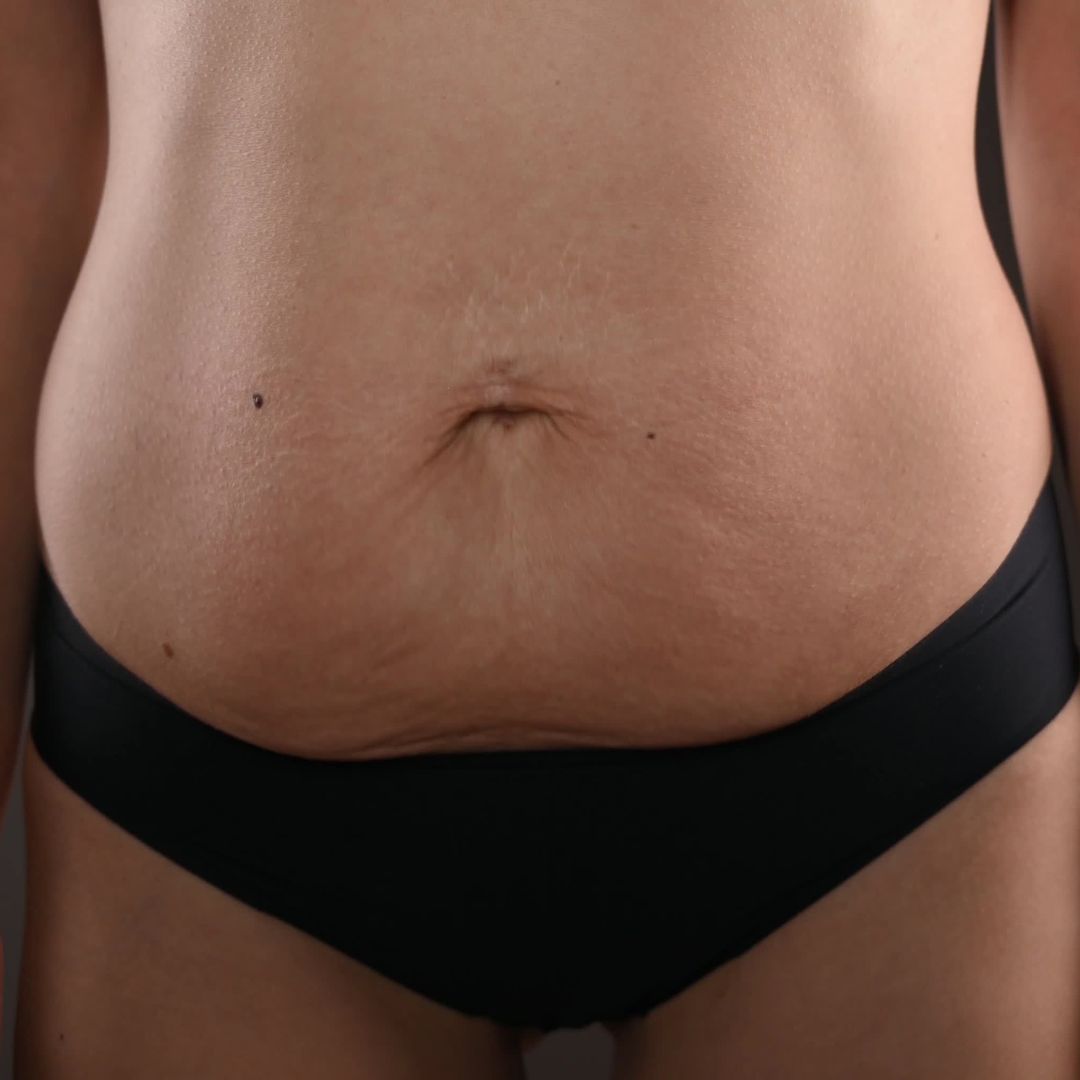
In recent years, as research has emerged, we are focusing now on both bringing the sides of the rectus abdominal muscles closer together but also, and perhaps more importantly, on improving the tension in the midline connective tissue called the linea alba. The linea alba consists of highly organised collagen fibres (type 1 and 3). You can picture it playing the role of the laces of a corset. We require tension or tightly secured corsetry to transfer load effectively across the midline. It is not surprising that women who may have a small abdominal muscle separation but significant damage to their connective tissue have trouble healing their separation and building abdominal wall strength. This is certainly what I have seen in practice. Conversely, sometimes women that have quite a large separation of 5 cm or more initially post-birth but quite good skin quality, muscles, and a “springiness” to their linea alba can make quick gains in their abdominal wall appearance and function as their natural recoil may be better. Ideally, we want gains both in function and appearance at the rest of the abdomen.
In the case of women who have moderate – significant linea alba distortion (stretching) can we do anything to facilitate improvement in the tissue support?
So let’s take a look at some research I found relating to collagen synthesis and tissue loading. There is nothing done on the linea alba but there is research on similar tissue in other parts of the body.
What science tells us
Mechanical loading (exercise) can improve connective tissue size, strength, and its mechanical properties by 5–20% (Progress in Molecular Biology and Translation Science, 2015).
Acute exercise has been shown to double the fractional synthesis rate of collagen in the patellar tendon within 24hr after exercise, showing a significant increase already after 6hr post-exercise. This corresponds to a collagen synthesis that, on a 24hr level, increases from around 1% at rest to 2–3% after exercise. The collagen synthesis rate remains elevated for at least 2–3 days after acute exercise (Kjaer etal, 2009). An interesting finding is that the magnitude of increase in collagen synthesis with acute mechanical loading seems to be quite uniform and relatively independent of the magnitude of exercise. Irrespective of whether heavy strength training, enduring leg kicking activity, or prolonged running was undertaken. Authors suggest that mechanical loading sets collagen synthesis at a new level, suggesting an “on-off” switch for connective tissue with regard to the need for mechanical loading in order to synthesize new collagen optimally. At this point, we don’t know what the minimum amount of exercise is to flick the switch. It is important to note this study was on men only.
So does gender matter?
Quite simply, yes it does.
At rest men had almost double the collagen synthesis of women (Miller etal 2007). At 72hrs post-exercise men continued to have elevated collagen synthesis, however women had returned to resting levels. As far as the authors are aware, this is the first study to compare rates of tendon synthesis between women and men indirectly or directly.
Miller and colleagues state that it is known that tendon collagen synthesis in men peaks at 24 hr after exercise and therefore cannot conclude that women do not respond to exercise at an earlier time point. It is therefore important to note that tendon collagen synthesis in women likely increases after a bout of exercise, but the response is both diminished in magnitude and in time compared with men. We require future studies to explore the collagen synthesis rates in women following exercise at earlier time points to determine when there is a peak synthesis rate, how much exercise is required to achieve it and how long it last. This will assist Physiotherapists in programming for maximum benefit to our clients.
Why don’t Women respond the same?
At this point in time, the relationship between estrogen and collagen synthesis isn’t clear.
It has been shown that estradiol receptors are present in ligaments (Sciore, etal, 1998). Estradiol can exert a collagen synthesis-inhibiting effect in tendons and ligaments (Yu etal, 2001).
There have been studies looking at collagen synthesis at different times in the menstrual cycle and they were unable to show a significant difference in the estrogen fluctuations of a cycle. However, it would be interesting to look at breastfeeding women and whether there is a better capacity to stimulate collagen production when estrogen levels are lower.

What happens when we don’t load muscles and tendons?
(Hirose et al., 2007) observed rat Achilles tendon and soleus muscle after 7 and 14 days of non-use. They found the soleus muscle mass decreased 50% after 14 days of unloading however the tendon tissue seemed protected from such pronounced changes. This tells us that the earlier we can resume exercising post-birth the more we will be able to prevent muscle loss.
Putting Research to Practice
My thoughts:
- Women’s collagen synthesis does not respond the same way as men’s in response to exercise and therefore we need gender-specific exercise programming.
- It matters less about how we load the connective tissue and more about starting to load the tissue to generate collagen synthesis. It would be great to see similar studies on the linea alba as those done on the patella tendon.
- Women’s collagen synthesis response to exercise has fallen almost to baseline 3 days post-exercise, meaning it may be more advantageous to do a little but more frequently eg programming every 1-2 days. Over years of clinical practice, I have found the women that do best with their laxed linea alba are the ones that commit to high-frequency training. I like to create achievable home programs of 5-15min performed daily, progressing as soon as clients are able. Set the timer and plan your workout times in advance. Consistency is key.
- It is important to exercise as soon as safely possible to minimise the loss of muscle mass that occurs rapidly with de-loading.
- Stop creating fear around movement. The message around diastasis needs to be movement positive. We do more damage by creating avoidance behaviours.